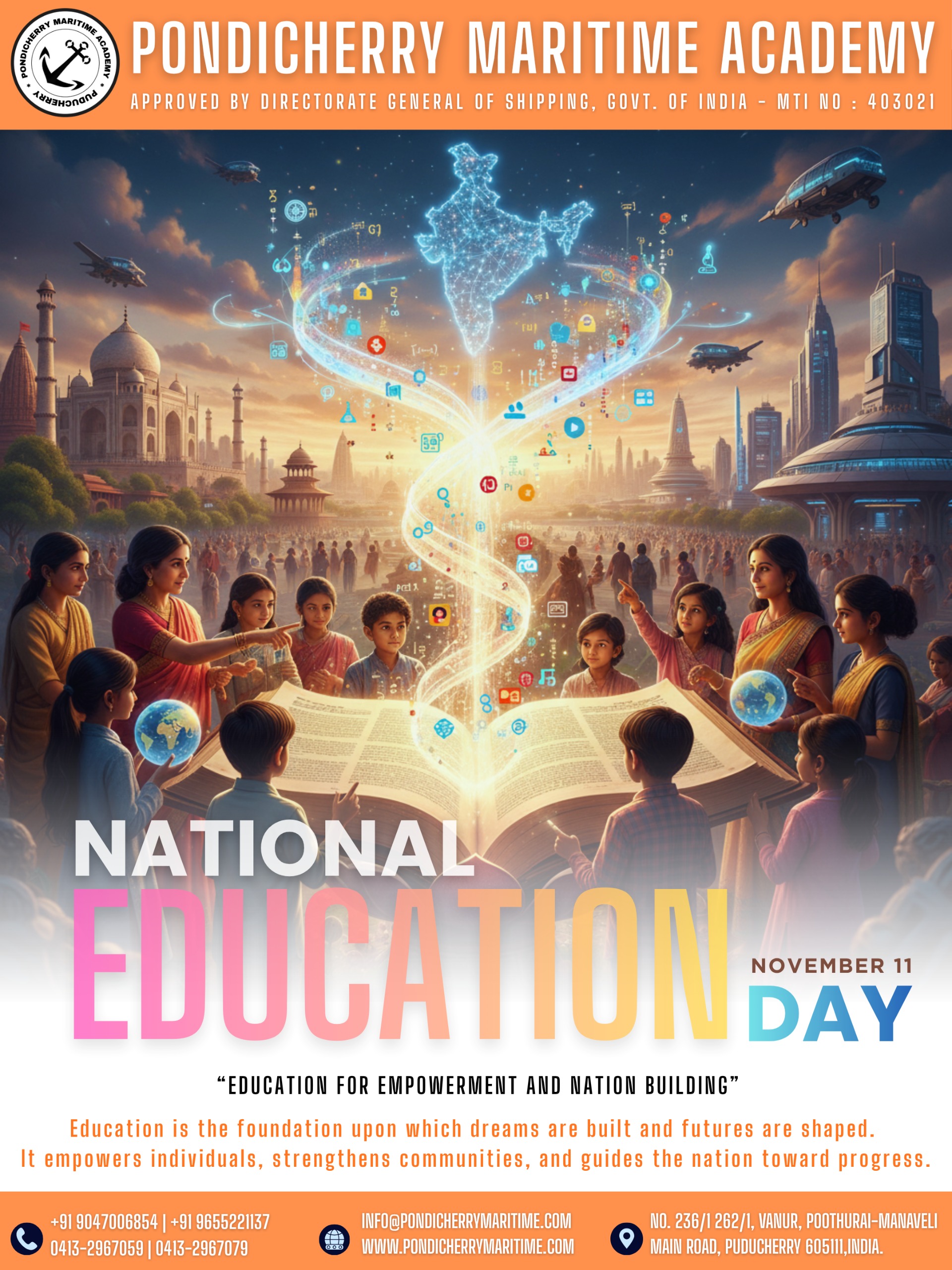


National Education Day: Celebrating the Power of Learning and Knowledge
Today, we celebrate National Education Day, honoring Maulana Abul Kalam Azad, India’s first Education Minister, whose vision laid the foundation for modern education in our country. Let’s remember that education is the key to empowerment, progress, and a brighter future for all. Together, let’s continue to learn, grow, and inspire!
Introduction
Every year, India celebrates National Education Day on November 11 to mark the birth anniversary of Maulana Abul Kalam Azad (1888–1958) — a visionary leader, freedom fighter, scholar, and India’s first Minister of Education. His lifelong mission was to make education accessible to all and to promote scientific and cultural advancement in post-independence India.
Why We Celebrate National Education Day
Education is the foundation of progress — it empowers individuals, strengthens communities, and builds nations. Maulana Abul Kalam Azad believed that education is not just about literacy but about awakening the mind and spirit. His vision laid the foundation for institutions like IITs, UGC, and AICTE, which continue to shape India’s academic excellence.
Theme of National Education Day 2025
“Education for All: Empowering Minds, Building the Future” This year’s theme reminds us that learning should be accessible to everyone, regardless of background, gender, or region. Education paves the path to equality, innovation, and national growth.
How We Can Contribute
• Encourage lifelong learning and curiosity. • Support digital literacy and inclusive education. • Promote skill-based and value-based education. • Celebrate teachers and mentors who shape young minds.
Legacy of Maulana Abul Kalam Azad
Maulana Azad firmly believed that education is the foundation of a strong nation. As the first Education Minister (1947–1958), he initiated major reforms that transformed India’s educational landscape. His remarkable contributions include: • Establishing the University Grants Commission (UGC) to maintain higher education standards. • Setting up premier institutes like the Indian Institutes of Technology (IITs). • Encouraging technical, scientific, and higher education for national development. • Promoting universal primary education and women’s literacy. • Advocating for free and compulsory education for all children up to the age of 14. His vision still inspires our educational policies today, fostering equality, inclusiveness, and excellence.
Education: The Greatest Equalizer
Education bridges social and economic gaps. It empowers individuals to think critically, make informed decisions, and contribute meaningfully to society. In today’s world, education goes beyond textbooks — it includes digital literacy, emotional intelligence, environmental awareness, and practical skill development. In maritime education, for example, it shapes disciplined, skilled, and responsible professionals who contribute to global trade, environmental protection, and national progress.
Education in the Digital Era
The 21st century has brought new opportunities through technology. Online learning platforms, digital classrooms, and e-libraries have made education more accessible and flexible. However, challenges like digital inequality and lack of infrastructure must still be addressed to ensure “Education for All.” As institutions and educators, it’s our responsibility to integrate technology wisely — blending traditional values with modern learning methods to prepare students for a global future.
Inspiring Message for Students
“Education is not the filling of a pail, but the lighting of a fire.” — William Butler Yeats Students are the torchbearers of tomorrow. On this National Education Day, let every student pledge to learn with curiosity, serve with humility, and grow with purpose. Learning never ends — it evolves every day with experience, effort, and enlightenment.
How We Can Celebrate National Education Day
• Organize seminars, essay writing, or quiz competitions on education and innovation. • Recognize teachers and mentors who make learning impactful. • Promote awareness about literacy and lifelong learning in local communities. • Share inspiring stories of educational reformers and achievers. • Reflect on how education has shaped your journey — and how you can pass it forward.
Conclusion
let us reaffirm our commitment to making education accessible, inclusive, and transformative for every learner. Education is not just a path to success but a tool to shape character, build empathy, and empower society. Let’s continue to uphold the vision of Maulana Abul Kalam Azad by spreading the light of knowledge and nurturing minds for a better tomorrow.